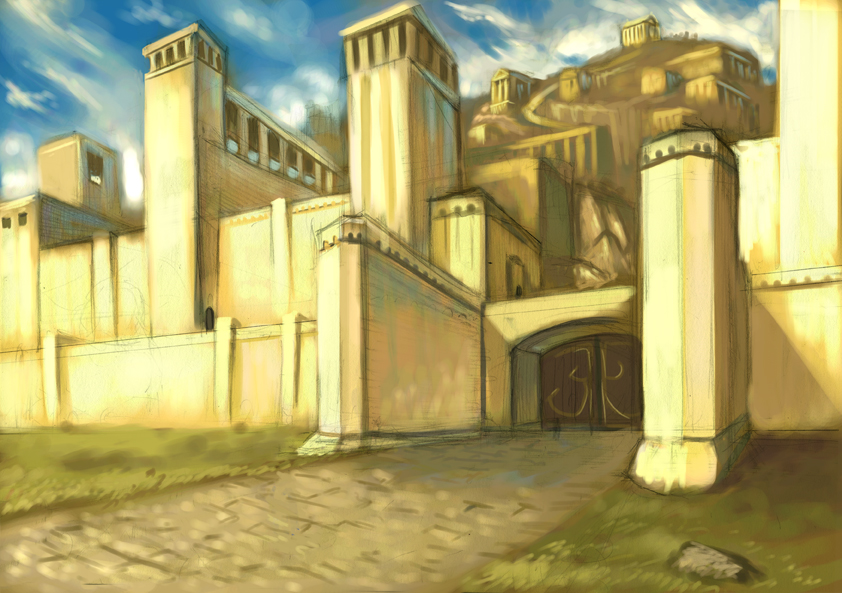
It is likely that growing up you at least had to read parts of Homer’s Iliad. The epic was based around the accomplishments of mythological hero Achilles, along with supporting characters of Odysseus, Ajax, and Patroclus. They are lead by the Mycenean king Agamemnon against the city of Troy and their set of heroes Hector and Paris. The Ancient Greek pantheon makes numerous appearances throughout the epic with Athena, Apollo, Ares and numerous other Greek gods that try and and turn the tides of the war. The question is not whether the details laid out in the story are true, but rather if an event like this even occurred.
The first detail of the story that raises alarm when scholars read through the Iliad is that the Greek army was unified under one common goal, to sack Troy. For those of you that may not know, ancient Greece was never united under one king. Greece was a collection of city states that frequently fought against one another. There were numerous alliances between the cities throughout the history of ancient Greece, but they never followed one king or ruler. This was also thought to take place around 1250 BC, well before Athens was the most prominent city and the event actual took place under the Mycenaean Civilization in Greece that last from 1600-1100 BC. There was even little archeological evidence that supported Greece, at this time, could form an army large enough to conquer Troy.
The second fact is that the Iliad was not written until 762 BC, about 500 years after the supposed siege of Troy would have taken place. It had been thought that the epic was written to promote Hellenistic pride among the Greek speaking peoples, as the Hellenistic culture was on the rise.
The third detail is that Troy had not been discovered. People had a general idea that it would have been in modern day Turkey somewhere along the Aegean Sea between Greece and Turkey. With all of these doubts that came to mind, it seemed to be that the city of Troy was just part of Greek Mythology.
That was until 1865 when Frank Calvert began an excavation on a location that people thought could have been the site of Troy. This calculation did yield a buried city that was part of a Roman settlement. In 1868, Heinrich Schliemann joined Calvert on a dig at the same site. They dug straight down and unfortunately dug through several layers of a city. Since they did not have modern day archeological equipment or follow more modern procedures, they were unaware how far to dig down. The dig, and subsequent digs, did identify the site of the mythical site of Troy! Unfortunately, the initial dig done by Schliemann went straight through the version of Troy, Troy VI, that would have been in the timeframe of the Greek Trojan War.
Since we now know that Troy existed, was there ever any conclusive evidence that the Mycenaeans ever attacked Troy. There was a study done in 1977 to try and map the locations described in the ancient Greek works. In 2001, the details of this study concluded that there were similarities in the evidence in landscape, campsites, and battle accounts. To further confirm that Troy did indeed exist, it is mentioned in numerous Hittite under the name of Wilusa, where home got his name for Troy Illios. Furthermore, to justify the Homeric Epic, there is also evidence that a real historical person in Hittite texts shared similarities to the character of Paris in the Iliad.
In short, yes the actual Troy existed and was a flourishing city that was founded around 3000 BC. It started as a small citadel on top of the mountain and grew into a large fortified city. The site of the city was occupied until 1300 AD, being under the Roman name Illium. The city eventually as Constantinople dominated the region in trade and culture. In terms of the Homeric Trojan War, it is likely there was a massive Greek invasion during that time. While the characters are legends, the fact that the Mycenaeans were able to accomplish a feat like this at that point in history, 1250 BC, speaks to the might that the Mycenaeans actually had and changed the way that historians looked at that time period in Ancient Greece.
Image By: https://www.deviantart.com/taekwondonj
 Daily Dose of History