
The first century of Roman emperors is filled with familiar faces that are well taught. This includes Octavian (or Augustus), Nero, Caligula, and Tiberius to name a few. However, during the first century there was a period where there were three emperors in just two years between Nero and Vespasian. It started in 68AD and lasted until 69 AD, also commonly called the Year of the Four Emperors. What caused this lack of stability and who were the men who claimed the throne in this short amount of time?
1: Galba

Galba was the Roman emperor who rebelled against Nero, who had a history of being extravagant and an overall ineffective ruler. Galba, at this time, was the governor of the Roman province in Spain. He had been this for eight years. Galba had previously been a consul, one of the most prestigious positions in Rome, and also had served in the senate before this position. He believed Nero viewed him as a threat and would try to eliminate him. Galba formed relations with a German tribe, the Lugdunensis, and rebelled against Nero. The praetorian guard, the emperors own personal legions, abandoned Nero as Galba had promised to pay them. Nero committed suicide in 68 AD. The Senate proclaimed Galba as the new emperor. He likely would have made a decent emperor. He tried to cut back the spending of the senate and their frivolous lifestyle, punish those wronged Rome, among other things. However, he frankly made too many people made. He never paid off the guard, wronged the Lugdunensis by not giving what was promise, and frankly was not liked by the senate for trying to cut spending or the people for some of the harsh punishments done to Nero’s forces. In January of 69 AD, the Praetorian Guard murdered him.
2: Otho
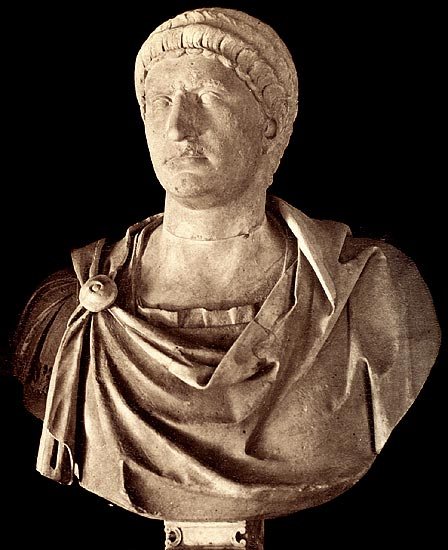
Otho was actually with Galba and joined his rebellion against Nero. Before this, he had been governing Lusitania. It was a largely unruly region of eastern Spain that was not the ideal place to govern. Relations with Galba faded when he felt robbed of a position and was the man responsible for turning the Praetorian Guard against Galba. Otho was proclaimed emperor after that event. However, the German legions that Galba had wronged were already marching towards Rome. Otho finally engaged them himself in battle, where he was defeated in April of 69 AD at the Battle of Bedriacum. He committed suicide after this defeat.
3: Vitellius
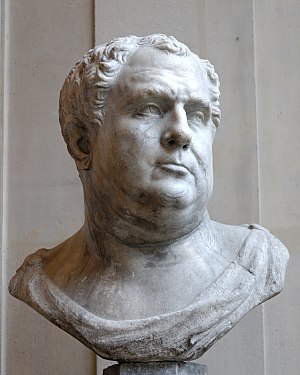
Aulus Vitellius became emperor after the death of Otho. Galba had appointed Vittelius the governorship of Lower Germany, which is what had turned Otho against Galba. Vitellus had marched against Galba and his army is the one that beat Otho at the Battle of Bedriacum. Vitellus became emperor in July of 69 AD through December of 69 AD. During this period he swiftly replaced the Praetorian Guard with is own troops. However, Vespasian was proclaimed emperor by the Roman troops in Judea and Egypt since he was leading a campaign in that region. Vitellius stayed in Italy and waited for Vespasian to arrive. Vitellus was defeated in December of 69 AD at the Second Battle of Bedriacum where he was killed. Vespasian lead Rome successfully for the next decade and began the Flavian Dynasty.
I hope you all learned something about Roman history today!
 Daily Dose of History