What is the Oldest Board Game?

Can you believe that the game of monopoly is 89 years old? That is nothing compared to some of the other games played by our ancestors. As it turns out, people have always needed to find a way to pass time and argue about rules amongst one another. This could probably be titled “When was the first board game flipped?” but unfortunately I am not sure we could say for sure. Anyways, lets take a step back and see what some of the oldest board games were.

Chess is definitely a common answer and arguably is one of the best documented games, both in terms of rules and development. Indeed its roots could be far older than what is currently known. There is just no concrete evidence to support this. Chess can trace it’s roots back to game from 6th century AD India to a game called Chaturanga. The rules of this game are unclear, but it did play similar to modern chess and shared the same pieces. The board operated the same, however, it was not checkered adding a degree of difficulty. Generally accepted though is that the current queen piece was considerably less powerful, moving one square diagonally. This would remain the case until around 1500. Pawn promotion also operated differently. Some accounts saying that it would be promoted to a then queen, while others suggesting it was promoted to the piece that started on the square. It is actually quite interesting reading the development of chess and do suggest it as it is fascinating not only to chess fans, but seeing how modern day things transition overtime. Chess was able to gain traction in the west thanks to its introduction to Persia, where it worked its way into the Arab world, Byzantine Empire and Russia. Modern chess itself has been around since the 16th century largely unchanged.

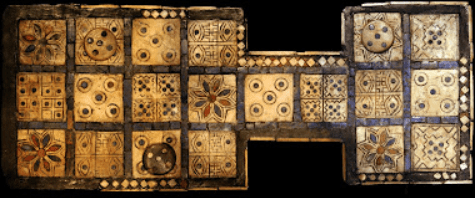
Despite chess being around for 1500 years, there are older board games that are more or less still playable. The Royal Game of Ur is the older game around that is still playable as we do have an actual set of rules to go with the game. The oldest set was found in the Royal Cemetery of Ur in modern Iraq, hence the given name, and dates back to 2600-2400 BC. Boards dating to around this time have been found throughout Mesopotamia and later boards around 800-1000 years later in Egypt. This game may have been the basis for the more common Egyptian game Senet. The difference is there is a tablet describing the rules for The Royal Game of Ur. One dates to 177 BC, so much later from when the game started, from a Babylonian scribe that was found in the 1880s.

There is of course a honorable mention, however the rules of the game have been long lost. In the Old Kingdom of Egypt, there was a game that we have given the Mehen. Accounts of the board game date back to 3000 BC. It has been depicted in ancient tombs and sites like Abydos. The board itself was circular and coiled, resembling that of snake coiled up. It was likely a race game much like the previous mentioned Royal Game of Ur and likely involved a type of dice as well. It seems this game died out before the Middle Kingdom of Egypt, as depictions and physical boards are not found dating in this period and beyond. Perhaps one day we will get lucky and discover the rules of this game.


The Great Wall of China

The Great Wall of China became a UNESCO World Heritage site in 1987. It is one of the most impressive defensive structures ever created due to its size and the resources required to build. The Wall’s history is a complex one that some may not be aware of. This includes its time period, inspiration, and the many many parties involved.

When looking at its history it is important to understand the social context in China at the time when the idea of the wall came about. This time period being around the 7th-3rd Centuries BC. China was not a unified country, but was rather divided between eight main states: The Yan, Zhoa and Zhonshan states to the North, the Qin to the West, the Chu to the South, and the Wei, Han, and Qi in the center. These states eventually broke into a constant war with one another, known as the ‘Warring States’ period of China between 475=221 BC which ultimately ended in a Qin victory. However, tensions were still high before this period as territorial disputes and raids were still common.

The first large section of wall was actually created in the 7th Century BC by the Chu state near its capital Danyang. Other states followed their lead, including the Qi state building a wall along their southern border with the Chu. The Zhongshan, bordering the Zhoa built walls to the west for protection against the former. The Wei state in an exposed position between the Zhoa and Qin states, built two walls to protect themselves against these states and also nomadic groups. This practice of extensive wall fortifications during this period ended in 290 BC when the Yan state built the final piece. It is interesting to note that the first intentions of the wall were not to protect from nomadic groups, but rather from other states. The Qin Dynasty was the first to erect a wall for the sole purpose of defending themselves from nomadic groups around 300 BC. After they unified China in 221 BC, large portions of walls were dismantled as they were no longer needed after unifying China. They then moved their efforts to fortify its northern borders and connected walls formed by the Yan, Zhoa and Qi.

The wall was maintained throughout the next 600 years without major growth. It was not until around 410 AD that the wall was greatly expanded under Bei Wei dynasty. It saw 600 new miles of wall added with secondary smaller walls added as extra protection. It was also during this dynasty around 560 AD that major renovations were seen along most of the wall as it had fallen into disrepair. New sections in the northwest were also added with total repairs and new sections totaling around 900 miles. So what caused this great fortification to become absolute? The Tang Dynasty, lasting between 618-907, greatly expanded China. The wall did not serve as a border anymore and became less significant. While the wall was used between 1000-1200, the Mongols eventually assumed control of China in 1206 and had no use for the wall. Certain sections of the wall were maintained for economic control. The Ming did try to extensively repair the Great Wall after pushing out the Mongols. The sections that are popular tourist sites today are largely due to these renovation projects. However, the Mongols and other tribes no longer threatened China as a more peaceful take emerged during the Qing Dynasty (1644-1911). Attacks were much less frequent and the wall gradually lost its strategic and defensive purpose.

Three Lesser Known Roman Emperors of the First Century A.D.

The first century of Roman emperors is filled with familiar faces that are well taught. This includes Octavian (or Augustus), Nero, Caligula, and Tiberius to name a few. However, during the first century there was a period where there were three emperors in just two years between Nero and Vespasian. It started in 68AD and lasted until 69 AD, also commonly called the Year of the Four Emperors. What caused this lack of stability and who were the men who claimed the throne in this short amount of time?

1: Galba

Galba was the Roman emperor who rebelled against Nero, who had a history of being extravagant and an overall ineffective ruler. Galba, at this time, was the governor of the Roman province in Spain. He had been this for eight years. Galba had previously been a consul, one of the most prestigious positions in Rome, and also had served in the senate before this position. He believed Nero viewed him as a threat and would try to eliminate him. Galba formed relations with a German tribe, the Lugdunensis, and rebelled against Nero. The praetorian guard, the emperors own personal legions, abandoned Nero as Galba had promised to pay them. Nero committed suicide in 68 AD. The Senate proclaimed Galba as the new emperor. He likely would have made a decent emperor. He tried to cut back the spending of the senate and their frivolous lifestyle, punish those wronged Rome, among other things. However, he frankly made too many people made. He never paid off the guard, wronged the Lugdunensis by not giving what was promise, and frankly was not liked by the senate for trying to cut spending or the people for some of the harsh punishments done to Nero’s forces. In January of 69 AD, the Praetorian Guard murdered him.

2: Otho

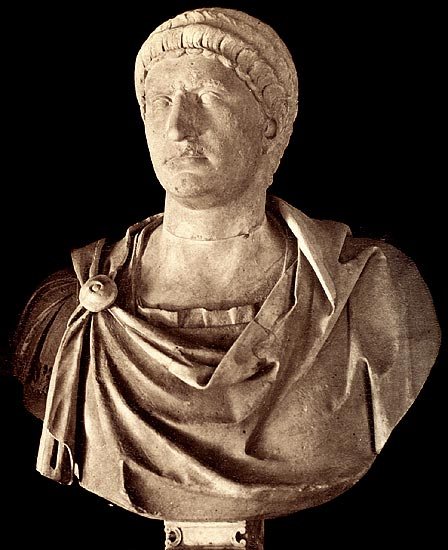
Otho was actually with Galba and joined his rebellion against Nero. Before this, he had been governing Lusitania. It was a largely unruly region of eastern Spain that was not the ideal place to govern. Relations with Galba faded when he felt robbed of a position and was the man responsible for turning the Praetorian Guard against Galba. Otho was proclaimed emperor after that event. However, the German legions that Galba had wronged were already marching towards Rome. Otho finally engaged them himself in battle, where he was defeated in April of 69 AD at the Battle of Bedriacum. He committed suicide after this defeat.

3: Vitellius

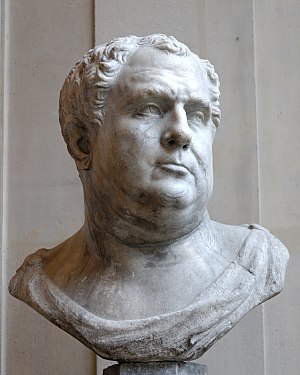
Aulus Vitellius became emperor after the death of Otho. Galba had appointed Vittelius the governorship of Lower Germany, which is what had turned Otho against Galba. Vitellus had marched against Galba and his army is the one that beat Otho at the Battle of Bedriacum. Vitellus became emperor in July of 69 AD through December of 69 AD. During this period he swiftly replaced the Praetorian Guard with is own troops. However, Vespasian was proclaimed emperor by the Roman troops in Judea and Egypt since he was leading a campaign in that region. Vitellius stayed in Italy and waited for Vespasian to arrive. Vitellus was defeated in December of 69 AD at the Second Battle of Bedriacum where he was killed. Vespasian lead Rome successfully for the next decade and began the Flavian Dynasty.

I hope you all learned something about Roman history today!

When Did Aquariums Become Popular

Whether you like them or not, you can still say that you feel a sense awe or relaxation when you look into an aquarium of any size. Granted, some aquariums get a bit carried away in my opinion, such as the harboring of large marine mammals like killer whales or the housing of whale sharks that migrate vast distances in the wild. However, on the smaller scale, aquariums can be quite magical whether it be a saltwater reef tank, a simple goldfish tank, or a planted freshwater tank.

So when did looking at fish through a small pane of glass become popular and where did they originate. The answer for the later is not so clear. It seems that the first widespread phenomenon of fishkeeping occurred in the 14th Century AD in China. These were not glass containers, but rather vats made to keep goldfish, likely koi’s. The region is still home to some of the most beautiful and priciest koi fish in the world today. Further advancements were made during this time which were the more modern day fish bowls, still made out of pottery, to likely house what we think of as goldfish. Now, it is unclear if Europeans saw this and decided it would be a good hobby to get into or if they evolved separately of one another.

The main scientific finding that made aquariums a widespread hobby was done in 1850 by the English Chemist Robert Warington. He realized that keeping plants in aquariums provided enough oxygen in the water to sustain the fish for long periods without special equipment. He came to this conclusion after experimenting with an aquarium housing plants, goldfish and snails. This seems horrific to todays aquarists who actively look to keep finding ways to increase oxygen in tanks through air stones and powerheads to increase water surface agitation, which is how the water releases carbon and absorbs oxygen. Nonetheless, this was a prominent finding at the time.

The hobby moved through England quickly, as the first public aquarium, known as the fish room, was established in 1853 by Philip Goose at the London Aquarium. Germany followed and began to setup aquarium societies by the mid 1870s. New methods of water circulation were being discussed at this time as well as methods for keeping the water balanced. In the United States, aquarium societies were being founded by the 1890s, the first in New York in 1893. The most important advancement for the hobby was done in 1908 when the first automated air filtration system was introduced for aquariums. A few other major developments that helped moved the hobby along was plastic bags to ship fish in 1950s and the use of cargo planes which ensured that fish would arrive quicker. The use of silicone also helped to progress the saltwater aquarium hobby as it protected the metal frames from corrosion.

If you are interested in the aquarium hobby but do not know where to start, please reach out to me. There are some excellent online forums with members willing to help, or as someone who enjoys the aquarium hobby myself, might be able to help you directly!

dailydoseofhistoryblogs@gmail.com

Scythians: The Lesser Known Steppe Culture

Who are the Scythians? Where did they come from? What makes them worthwhile to talk about?

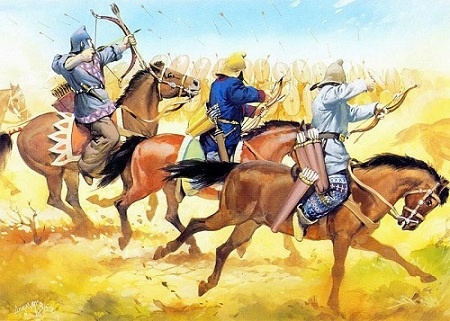
The Scythians is a lesser known steppe civilization from the Pontic Steppe around the Black Sea. It is widely believed that the Scythians were of Iranian origin, as their language and religious beliefs show similarities to the cultures of that time period. However, recent evidence from 2017 has found that they genetically developed independently of these cultures and likely came from a more northern culture, the Yamna. The Scythians were a prominent culture from the 8th Century BC to the 3rd Century BC.

Much like the Mongols, the more famous of steppe warriors, they influenced history not by sustained conquest, but by raiding. Also like the Mongols, they were a culture, not a true civilization, as they were made up of a collection of tribes. The most prominent group were the Royal Scythians, the aristocracy of these tribes and acted as the dominant leaders in military campaigns. The Scythians briefly held control over the Medes in the Iranian Plateau, who were frequently fought with ancient Egypt. This control was short lived as a large number of Scythian warlords were trapped and killed in a feast by the leader of the Medes, Cyaxares, in 620 BC. After this, the Scythians aided the Achaemenid Empire, the first true Persian empire, in the destruction of the Assyrians as they defeated them at their capital Nineveh in 612BC.

Under Darius II rule of the Achaemenid Empire, he famously sought to take Greece. In doing so, despite the kingdoms being allies against the Assyrians, he needed to carve out territory around the Black Sea. He was able to easily take this territory and the Scythians were separated into three kingdoms after this.

The Scythians would not rise to prominence again until 496 BC under king Scyles. He was able to carve out territory into Thrace as well as recapture territory and settlements from the Greeks in the Caucus. While there was a slight fall, Scythian King Ateas was able to unite a large number of Scythian tribes in the early 4th Century BC. He gained further control in Thrace which allowed him to set up a successful trade route in from the Adriatic Sea to the Black Sea, the homeland of the Scythians. Unfortunately, a knew kingdom was gaining prominence, Macedon under Philip II, father of Alexander the Great. Philip was able to successfully push back the Scythians from Thrace and back to the Black Sea, where King Ateas died in battle. Further decline continued in the 3rd Century BC when Celts began to migrate into their territory in the Black Sea and Sarmations, of Ural origin, began to take their land as well. Pontus, a kingdom set up by Alexander the Great’s general, also defeated them numerous times in the 2nd century BC. These defeats seem to have destroyed the Scythian culture and way of life as it seems they transitioned to a more settled way of life and assimilated with other cultures. The Scythian’s were completely destroyed in the 3rd Century AD when Goths destroyed their capital.

The Scythians, despite being nomadic, were highly militaristic. As mentioned, the Royal Scythian tribe was especially militaristic rather than just focusing on pastural life. The Scythians were also very skilled in metallurgy, likely learning it from the neighboring Middle Eastern civilizations. They did have an archaic form of Zoroastrianism religion despite not having a written language. They clearly did conduct trade amongst their neighbors and other tribes within the culture, likely in grain. The Scythians did have a unique art form and focused on animals, a style that has been known as the Scythian Animal Style. They were influenced by Persia and Greece and there they did have some scholars that frequented Athens during the Athenian Golden Age.

Herodotus, the Greek historian, is the most prominent source of Scythian information. Overall, their dominance of the Caucus for nearly 600 years is their legacy. They were uncontested militarily in the Middle East until Darius II strengthened and grew the Achaemenid Empire. Scythian control over the region of Thrace was uncontested until Philip II of Macedon. Their military helped develop Persian and Macedonian militaries as their mounted style of fighting had been unrivaled. The cultural developments in metallurgy and art shows a unique feature that they were not just pastural and militaristic, but had a defined social structure despite never being clearly unified.

The City of Troy: Myth or Fact?

It is likely that growing up you at least had to read parts of Homer’s Iliad. The epic was based around the accomplishments of mythological hero Achilles, along with supporting characters of Odysseus, Ajax, and Patroclus. They are lead by the Mycenean king Agamemnon against the city of Troy and their set of heroes Hector and Paris. The Ancient Greek pantheon makes numerous appearances throughout the epic with Athena, Apollo, Ares and numerous other Greek gods that try and and turn the tides of the war. The question is not whether the details laid out in the story are true, but rather if an event like this even occurred.

The first detail of the story that raises alarm when scholars read through the Iliad is that the Greek army was unified under one common goal, to sack Troy. For those of you that may not know, ancient Greece was never united under one king. Greece was a collection of city states that frequently fought against one another. There were numerous alliances between the cities throughout the history of ancient Greece, but they never followed one king or ruler. This was also thought to take place around 1250 BC, well before Athens was the most prominent city and the event actual took place under the Mycenaean Civilization in Greece that last from 1600-1100 BC. There was even little archeological evidence that supported Greece, at this time, could form an army large enough to conquer Troy.

The second fact is that the Iliad was not written until 762 BC, about 500 years after the supposed siege of Troy would have taken place. It had been thought that the epic was written to promote Hellenistic pride among the Greek speaking peoples, as the Hellenistic culture was on the rise.

The third detail is that Troy had not been discovered. People had a general idea that it would have been in modern day Turkey somewhere along the Aegean Sea between Greece and Turkey. With all of these doubts that came to mind, it seemed to be that the city of Troy was just part of Greek Mythology.

That was until 1865 when Frank Calvert began an excavation on a location that people thought could have been the site of Troy. This calculation did yield a buried city that was part of a Roman settlement. In 1868, Heinrich Schliemann joined Calvert on a dig at the same site. They dug straight down and unfortunately dug through several layers of a city. Since they did not have modern day archeological equipment or follow more modern procedures, they were unaware how far to dig down. The dig, and subsequent digs, did identify the site of the mythical site of Troy! Unfortunately, the initial dig done by Schliemann went straight through the version of Troy, Troy VI, that would have been in the timeframe of the Greek Trojan War.

Since we now know that Troy existed, was there ever any conclusive evidence that the Mycenaeans ever attacked Troy. There was a study done in 1977 to try and map the locations described in the ancient Greek works. In 2001, the details of this study concluded that there were similarities in the evidence in landscape, campsites, and battle accounts. To further confirm that Troy did indeed exist, it is mentioned in numerous Hittite under the name of Wilusa, where home got his name for Troy Illios. Furthermore, to justify the Homeric Epic, there is also evidence that a real historical person in Hittite texts shared similarities to the character of Paris in the Iliad.

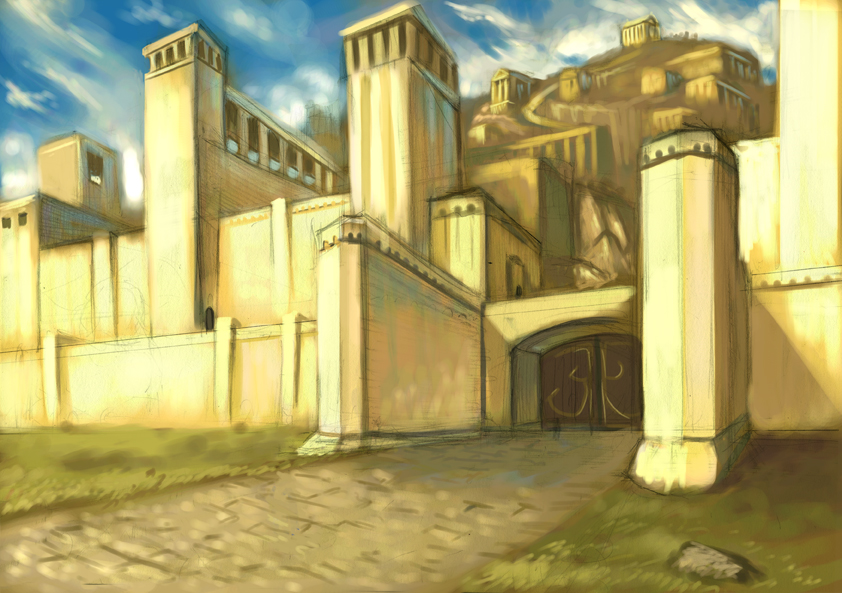
In short, yes the actual Troy existed and was a flourishing city that was founded around 3000 BC. It started as a small citadel on top of the mountain and grew into a large fortified city. The site of the city was occupied until 1300 AD, being under the Roman name Illium. The city eventually as Constantinople dominated the region in trade and culture. In terms of the Homeric Trojan War, it is likely there was a massive Greek invasion during that time. While the characters are legends, the fact that the Mycenaeans were able to accomplish a feat like this at that point in history, 1250 BC, speaks to the might that the Mycenaeans actually had and changed the way that historians looked at that time period in Ancient Greece.

Image By: https://www.deviantart.com/taekwondonj

The Richest Man to Ever Live

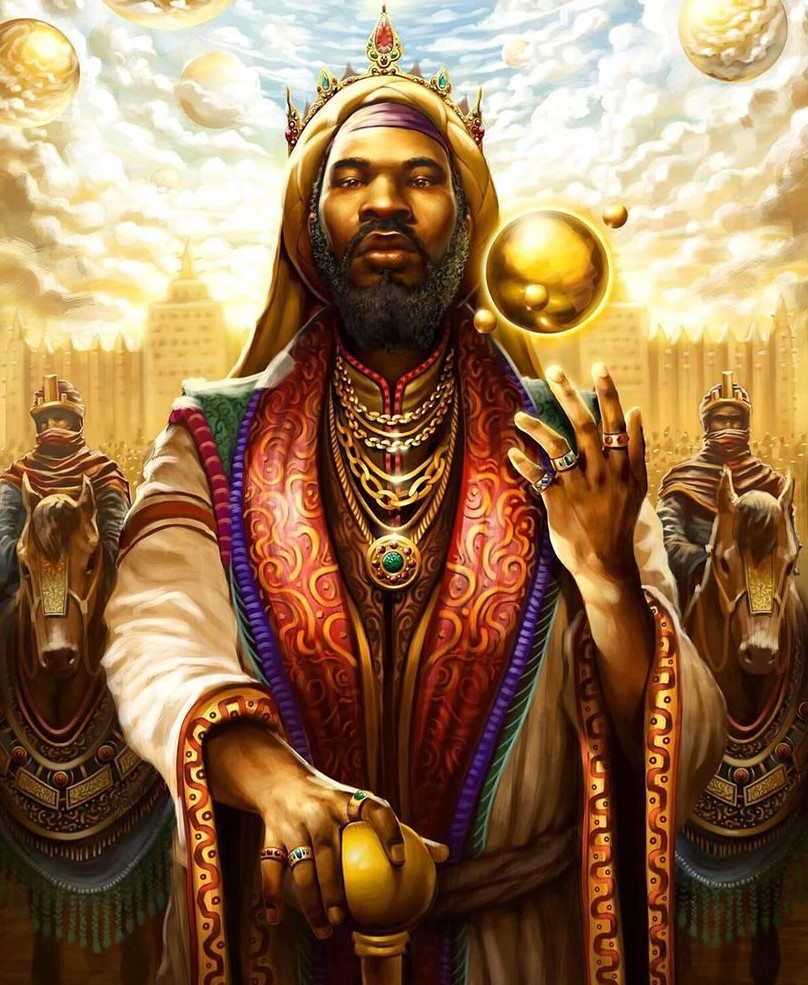
We have all heard of wealthy individuals in our lifetime. People such as Jeff Bezos, Mark Zuckerberg, Warren Buffett, and Bill Gates all come to mind when we think of wealth in modern times. However, there lived a man who ruled the Mali Empire in West Africa from 1312 – 1337.

Mansa Musa, believed to be the 10th ruler of Mali, has been credited with being the worlds wealthiest individual to ever exist. He is credited with having an estimated net worth of $400 billion. Keep in mind, this was during the Middle Ages in Europe and not in the industrialized world we live in today. You may be asking yourself, how was someone able to accumulate such incredible wealth? Mansa Musa did have a clear advantage. The Mali Empire, before Musa’s ascension, had conquered the Ghana Empire. He also profited from the growing connection of Islamic Empires that were rising across Northern Africa. It brought more security in trade and the common religion helped to unify people that he conquered.

That is not to say that he had everything given to him. In fact, Mansa Musa conquered twenty-four cities during his reign, or about one per year if you were to average it out. There were also rebellious cities, such as Gao, which Musa was able to recapture in 1325 and became a prominent trading post in the Western Sahara. It still belongs to Mali to this day.

The Mali Empire under Mansa Musa soon became the largest producer of gold in the world. It became so prominent that the prominent traders of the Mediterranean, such as Venice and Genoa, frequently made the trip to trade for their gold. With this wealth, Musa rebuilt a palace at the capital city of Timbuktu and a massive mosque that still stands today. He was able to fully staff the University of Sankore, which became a prominent center of learning, the likes of which had not been seen since the Library of Alexandria with an estimated one million manuscripts.

In short, Musa was able to accumulate his wealth due to the large gold mines that were in the Mali Empire. Though the empire was built, Musa was able to bring the Mali Empire to the grandest empire in Western Africa. His wealth was known throughout Africa and Southern Europe where those that were able, greatly profited off the trade that the Mali Empire created. Through this wealth, Musa underwent construction projects that made the Mali Empire not just a trade stop, but a prominent civilization that lasted until 1670.

Mansa Musa reportedly died in 1337 when his son, Maghan, took the throne.